MetAmazonia
An immersive web and VR environment for an Amazon conservation area, streamed from Unreal Engine 5.
- Role
- UX/UI Designer: user research, interaction, visual design, prototyping and testing
- Period
- April to August 2022, 4 months
- Team
- Jonathan Biz Medina (project management, senior producer), Guilherme Anjos and Winner Farias (UX/UI design), and ZOAN's 3D artists
- Platform
- Web, streamed from Unreal Engine 5 with pixel streaming, and VR
- Outcome
- Tested at conferences with gamers and non-gamers; their feedback showed it worked for both.
Overview
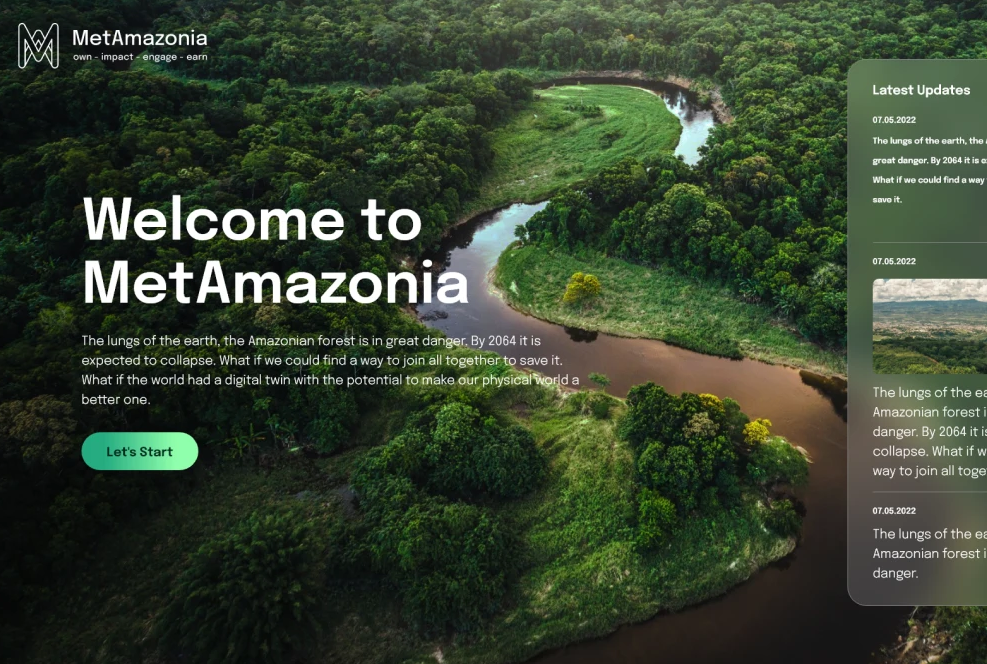
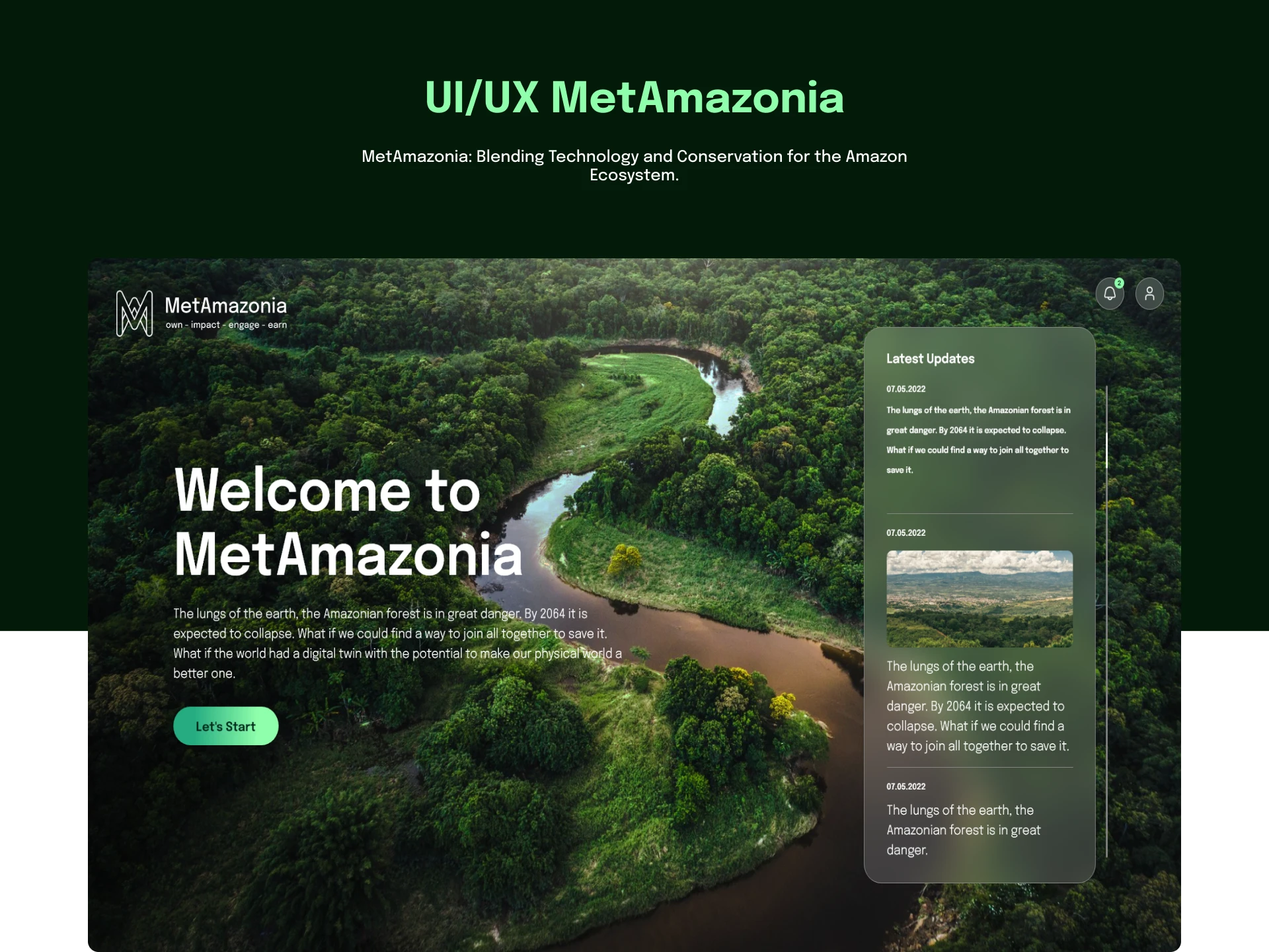
MetAmazonia was an immersive digital environment built around a streamed Unreal Engine experience: a digital recreation of a conservation area in the Amazon Rainforest, developed by ZOAN, where companies and individuals could see how their investments in conservation were used.
I worked across research, interaction design and UI with a producer, another UX/UI designer and ZOAN's 3D artists, designing how people navigated and interacted with the environment without assuming prior experience with VR or 3D interfaces. This is work from 2022, earlier in my career.
User research
We combined online surveys and direct sessions. The surveys went to potential users, gamers and non-gamers, about their familiarity with conservation and what they expected from digital experiences. Interviews and usability tests with a smaller group put early prototypes in front of people.
The surveys pointed to a preference for simple navigation and interactive elements, which fed the decision to include the emote wheel and clickable hotspots. Usability testing showed that parts of the interface were confusing. That led to a redesign with clearer paths through the experience and information that was easier to reach.
User flow
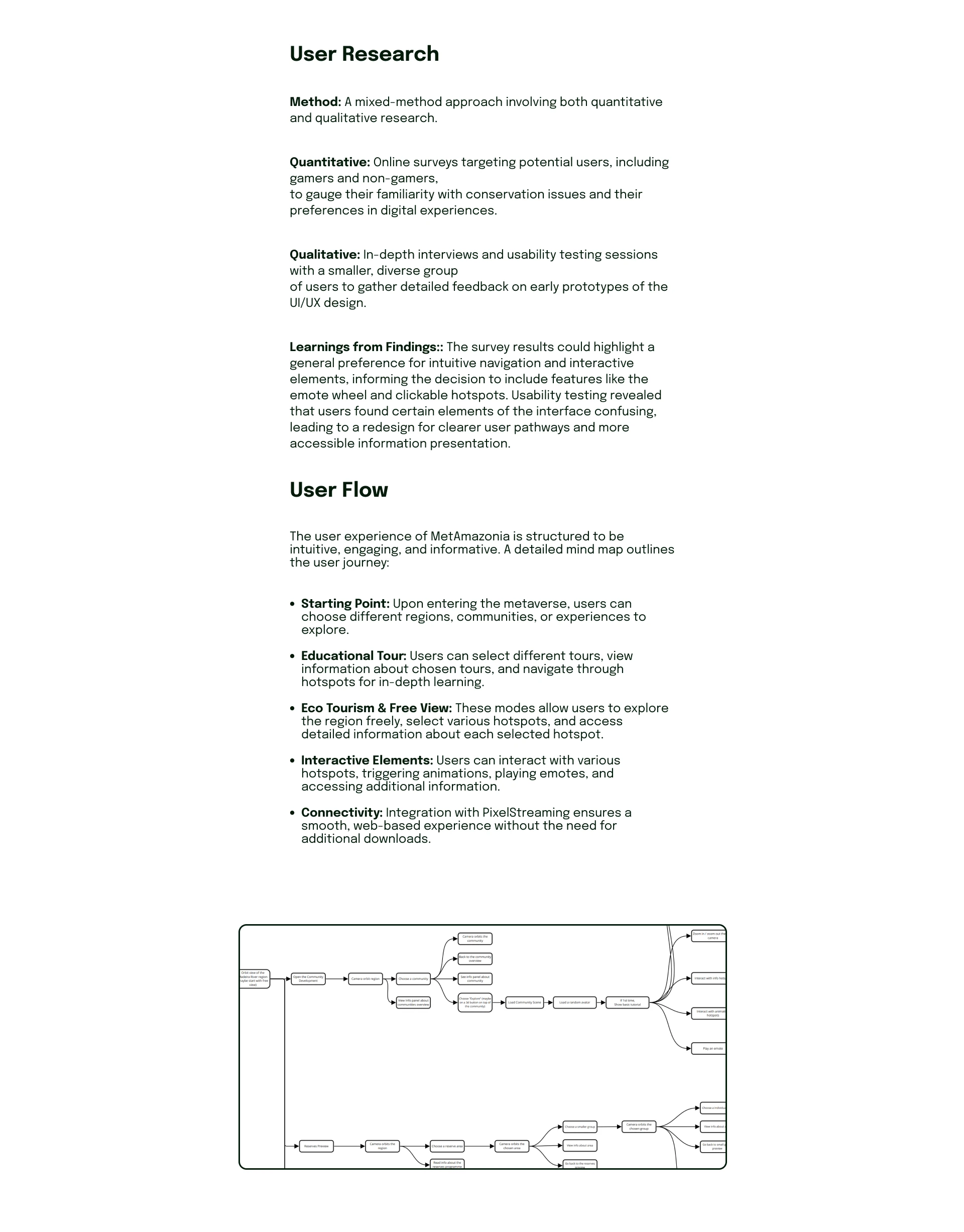
People enter by choosing a region, a community or an experience. From there:
Educational tour: pick a tour, see what it covers, and move through hotspots that explain each stop.
Eco tourism and free view: explore the region freely and open any hotspot for its details.
Hotspots: trigger animations, play emotes or open more information.
The whole experience ran in the browser through pixel streaming, with nothing to download.
Design challenges and solutions
The main problem was combining two navigation models in one space. Showroom visitors on the web know hotspots and modals; games move you through a 3D world. People had to move between reading information and exploring the environment.
We worked through it in many iterations with the 3D artists and the producer, trying interface options until both modes worked together, and I turned the prototypes into assets the artists could use in Unreal Engine 5.
The VR version came later and separately. It needed its own interface approach while keeping the same core interactions.
Conceptualization
I started with the information architecture and low-fidelity sketches of the main interactions, tested them with users, and then moved to high fidelity.
The feedback led to concrete changes: hotspots got stronger colour and clearer icons, and the information modals carried less text.
For VR, I resized and optimised each interface asset from web size to 4K for Unreal Engine.
Key features
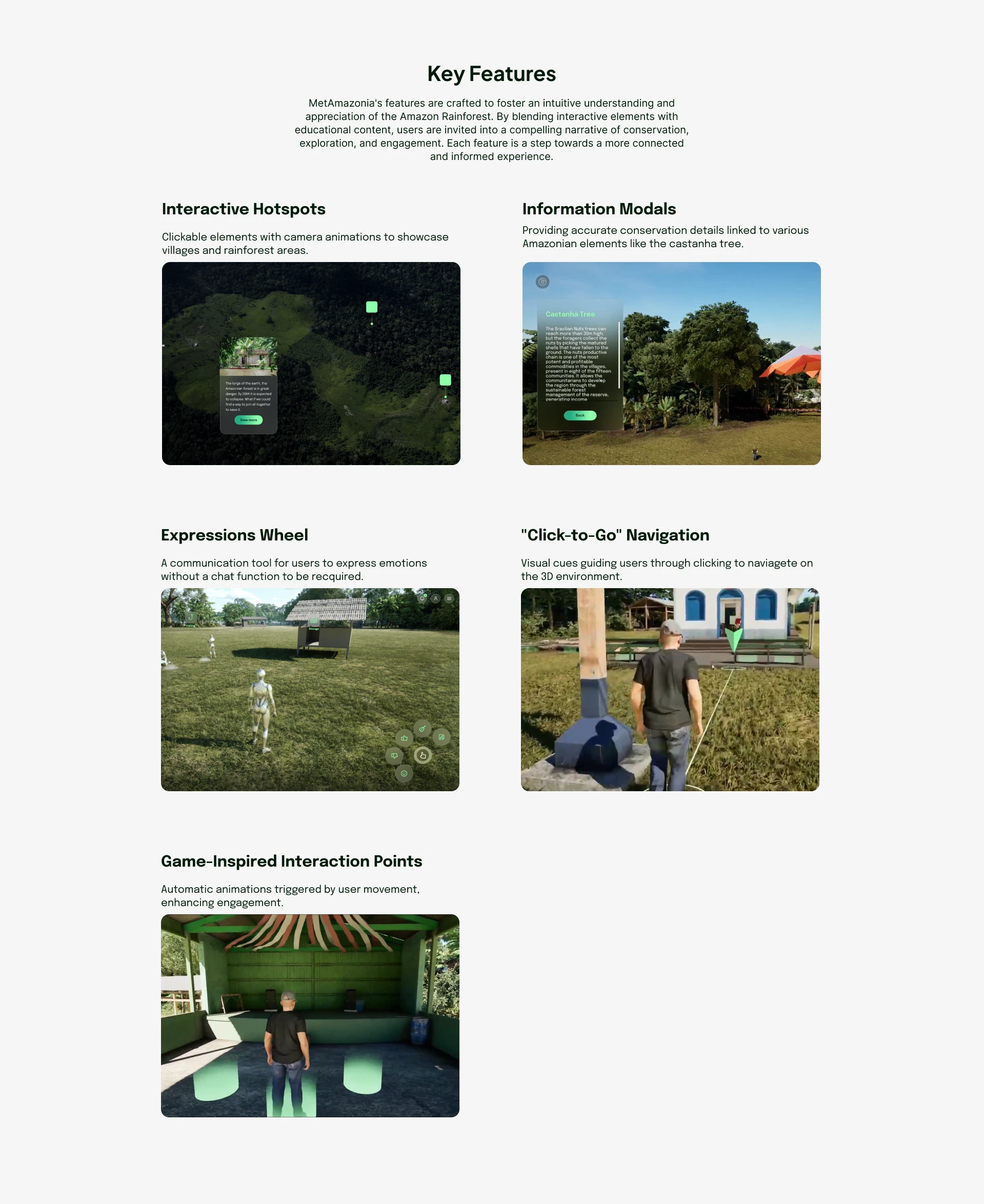
Interactive hotspots: clickable points with camera animations to villages and areas of the forest.
Information modals: conservation details linked to elements of the forest, like the castanha tree.
Expressions wheel: a way for people to react to each other without needing a chat.
Click-to-go navigation: visual cues for moving through the 3D environment by clicking.
Interaction points: animations that start automatically as people move through the space.
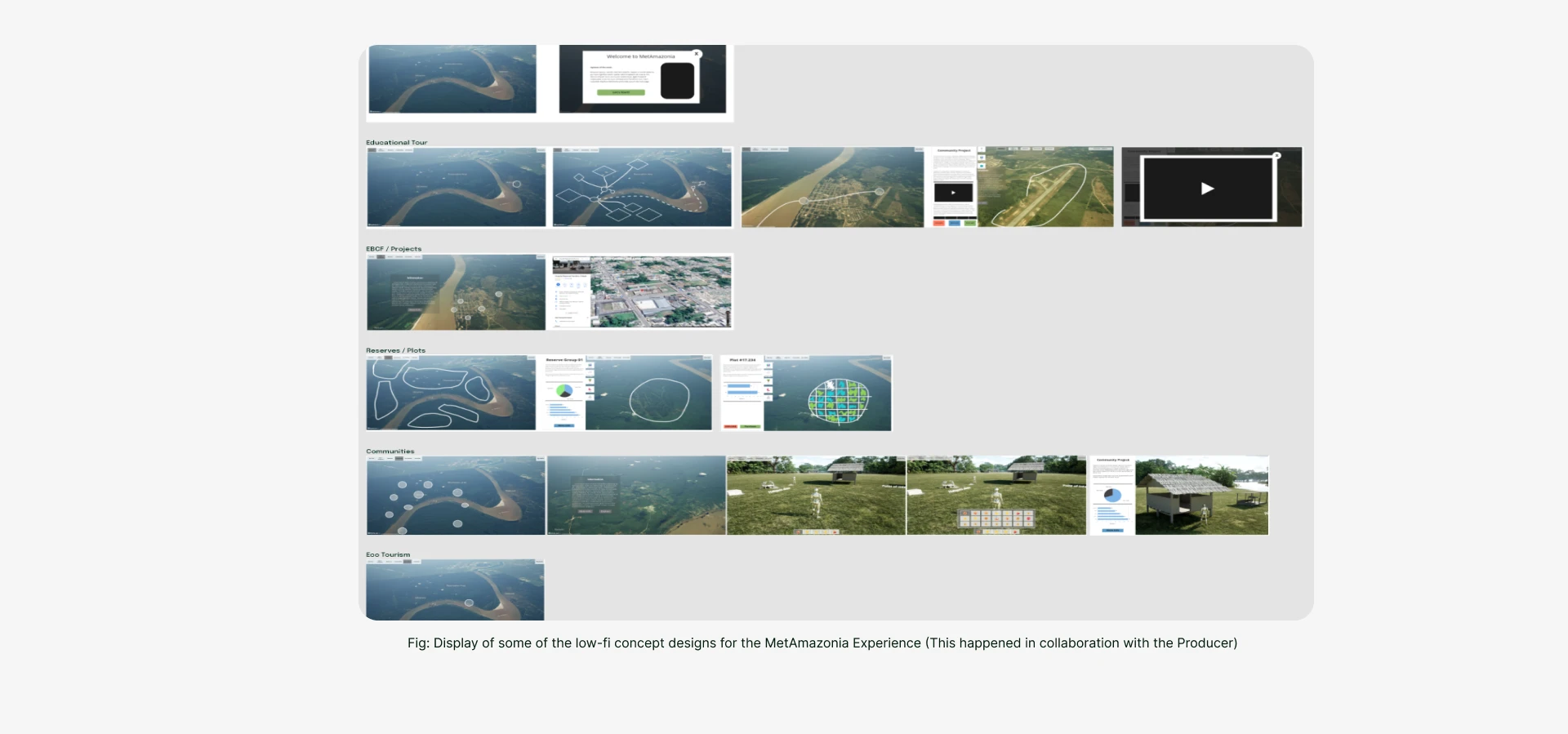
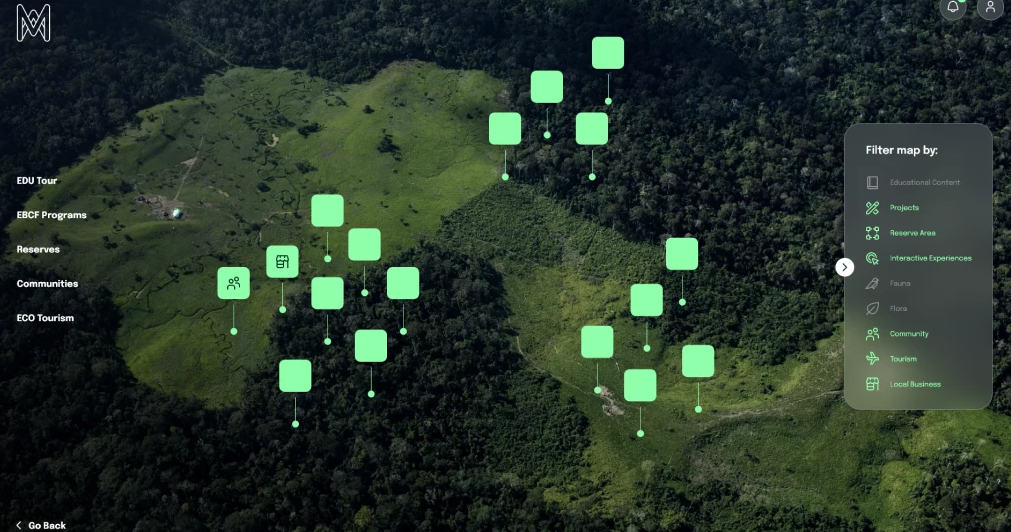
Welcome screen
An aerial view of the region. From here people choose an area (the Jatuarana reserves, the reservation area, Maricoré) or a module: Edu Tour, EBCF Program, Reserves, Communities, Eco Tourism, or free view.
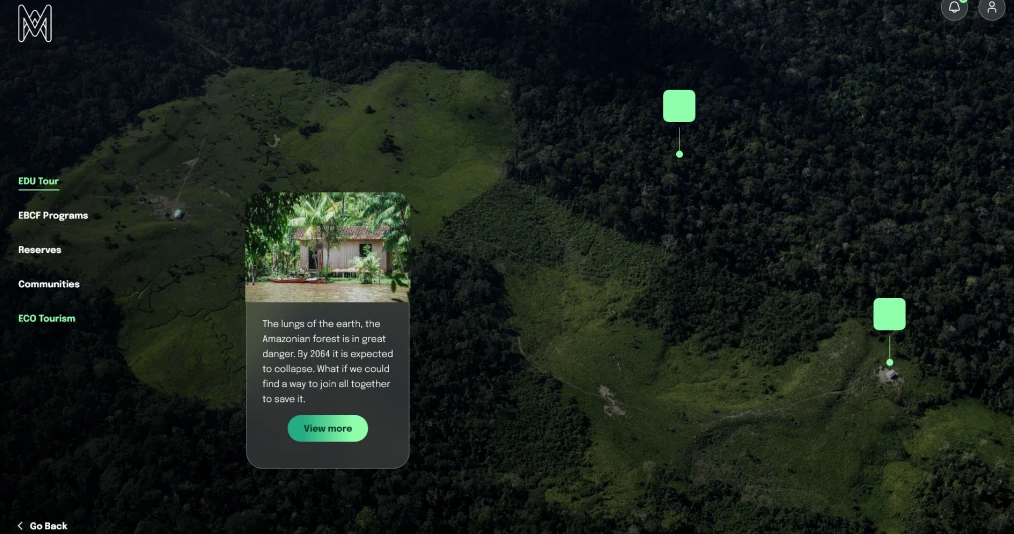
Educational tour
People pick a reserve or community on a map. Each one opens a showroom-style tour with aerial camera moves between clickable hotspots; a hotspot opens a side panel with text, video and other media about the area.
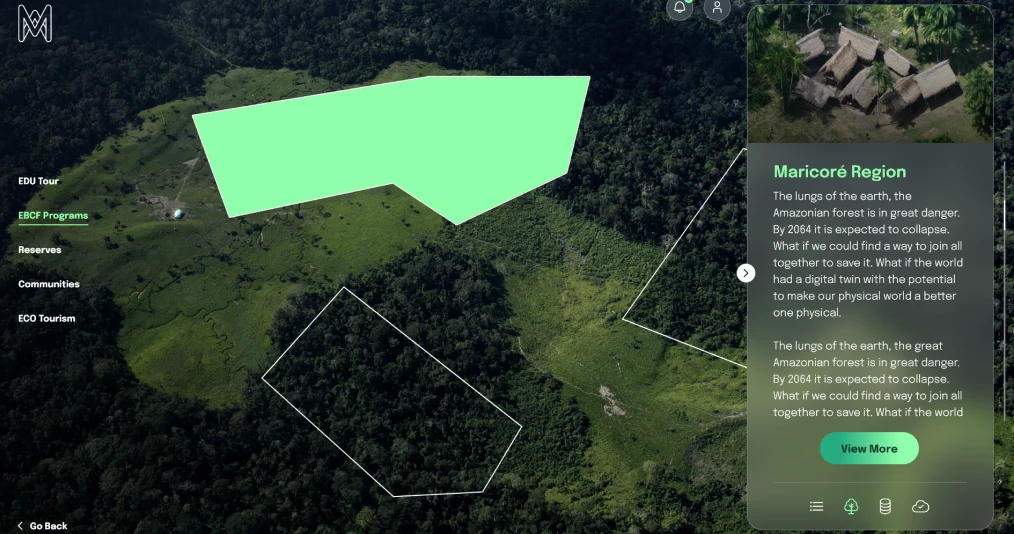
EBCF / Projects
City projects on an interactive map of land plots. Each plot shows information about the area for potential investors.
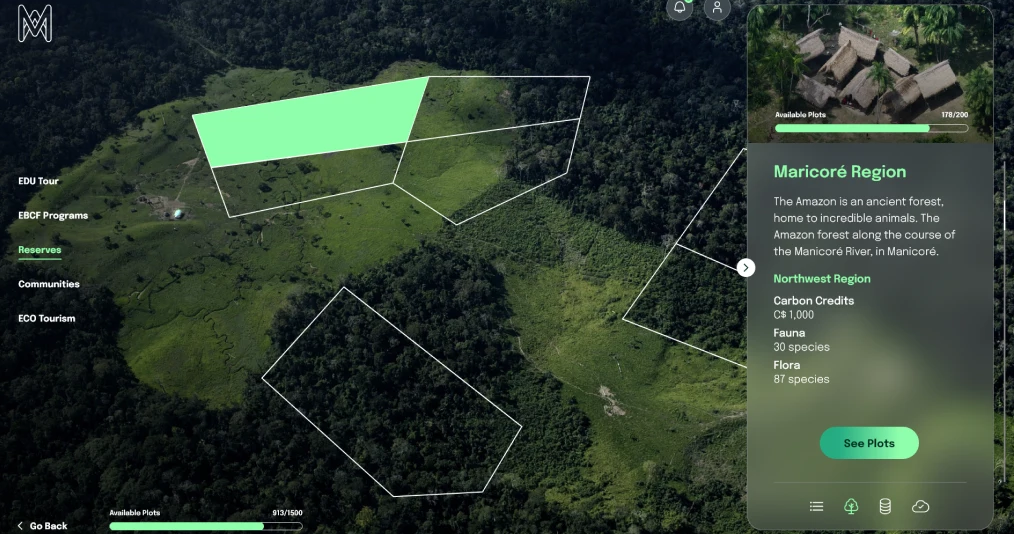
Reserves
Where people could buy land plots. Hovering over a plot shows its details before buying.
Communities
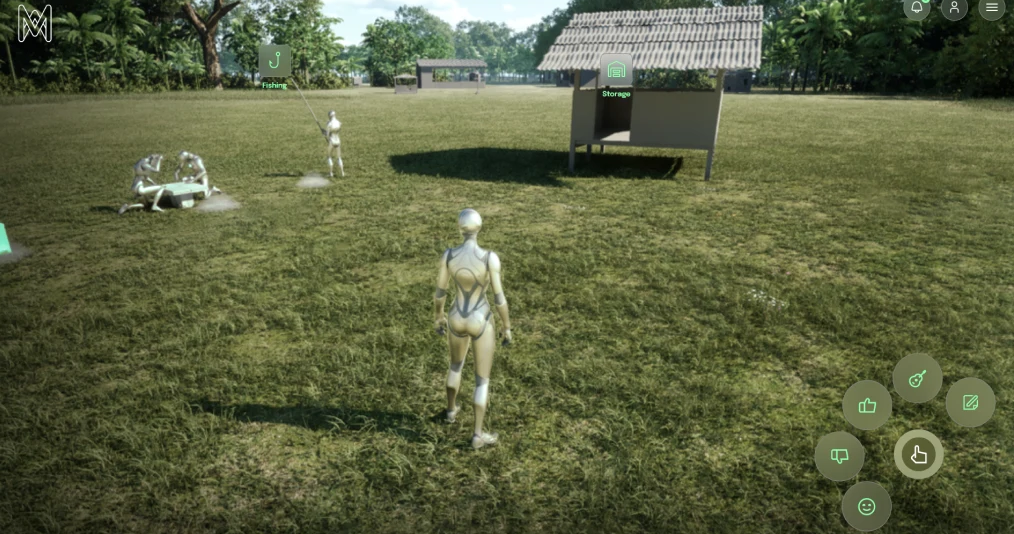
The deepest interaction: a 3D village built in Unreal Engine, a digital twin people could walk and run through, open hotspots, listen to music and dance in. It ran in the browser through pixel streaming.
Testing, accessibility and fieldwork
We tested with gamers and non-gamers at conferences. Their feedback showed the experience worked for both: immersive for people used to games, understandable for people who were not.
For readability we chose high-contrast colours, clear typography and large icons.
Because the project was about conservation, the team did fieldwork in the Amazon to catalogue the region's plants and animals, so the environment reflected the real place.
Reflection and learning
MetAmazonia combined my experience with product showrooms and my interest in game design. Working with a producer and 3D artists expanded my skills, especially in VR, where the interface needed a different approach from the web.
14 · SEE IT